— Notre méthode de travail

Chaque étape compte. Aucune n'est laissée au hasard.

De votre premier envoi au document final, le processus est structuré, itératif et calé sur votre calendrier de soutenance. Trois cycles de retour minimum avant toute validation.
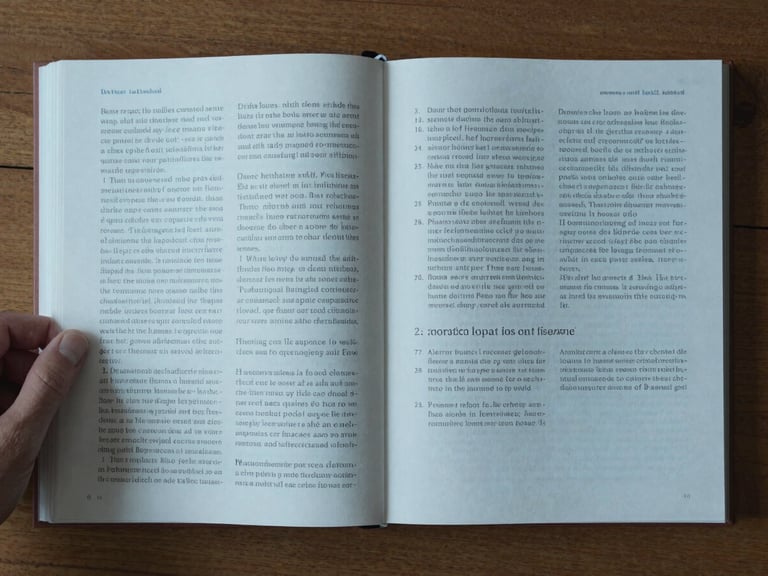
Overhead flat-lay of an open academic manuscript on a wooden desk, a hand resting beside annotated pages, cool north-facing daylight falling across the paper, dense margin notes visible in ink, no digital devices
Close-up of a hand holding a pen, making a correction mark on a printed thesis page, soft tungsten light from the left, the text and red ink annotation sharp in the foreground, paper texture visible
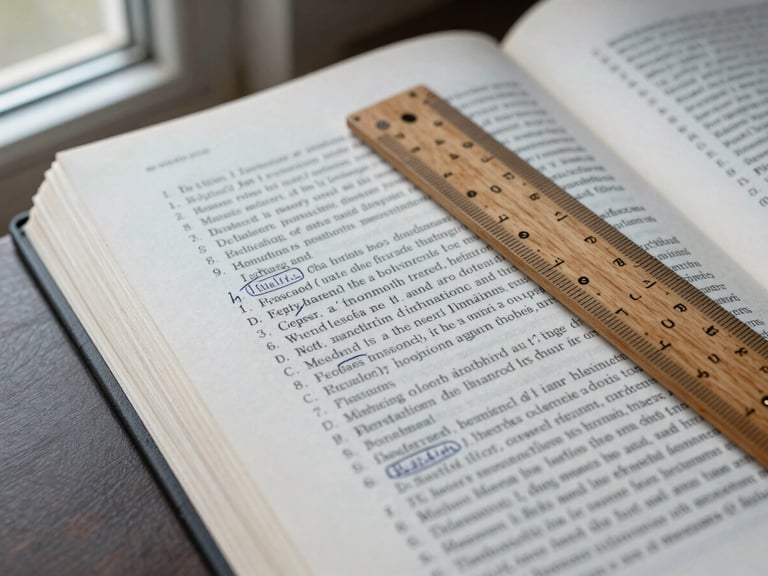
Tight detail shot of a bibliography page with handwritten correction marks, a wooden ruler placed across the margin, cool daylight from a window to the left, paper slightly worn at the edges
Wide overhead flat-lay of a finished manuscript stack beside a closed notebook and a pen on a textured linen desk surface, soft north-facing daylight, clean and settled composition, no hands in frame
/ Quatre étapes claires

De la première page au document validé

01 — Diagnostic initial

Nous lisons votre manuscrit en entier avant de vous répondre. Le premier retour identifie les failles structurelles, les lacunes argumentatives et les priorités de révision.

02 — Cycles de retour structurel

Chaque cycle cible un niveau précis : architecture du plan, cohérence des arguments, puis précision du style. Vous répondez aux questions posées — vous restez l'auteur du travail.

03 — Vérification des normes

Citations, bibliographie, mise en forme selon les exigences de votre établissement : chaque convention est vérifiée ligne par ligne, rien n'est supposé conforme.

04 — Validation finale

Le document est déclaré prêt uniquement quand argument, forme et normes tiennent ensemble. Nous vous remettons un rapport de clôture et un calendrier de relecture autonome.

Questions fréquentes

Ce que les étudiants demandent avant de commencer

Écrivez-vous à ma place ?

Mon délai de soutenance est serré.

Combien de cycles de retour ?

Non. Nous lisons, questionnons et annotons. Chaque reformulation vient de vous — notre rôle est de rendre vos propres arguments lisibles pour un jury.

Les délais sont fixés au premier échange et tenus. Nous n'acceptons un dossier que si le calendrier disponible permet un travail rigoureux.

Au minimum trois, ciblant chaque niveau du texte. Un quatrième cycle est possible si un argument central nécessite une reconstruction complète.

Votre manuscrit attend une lecture rigoureuse.